.png&w=1920&q=75)
- Date
Where to Find Nigerian Handmade Products Online
Nigeria has no shortage of people making interesting things. From leather sandals and handbags to jewellery, woven baskets, clothing, artwork and home décor, small businesses and independent makers produce products that often reflect skills, materials and design traditions that are difficult to find in mass-produced goods.
The challenge for shoppers is not necessarily finding Nigerian-made products. It is finding them online, knowing who is behind the product, and knowing what you are actually buying.
A growing number of Nigerian businesses now use Instagram, Facebook, TikTok and WhatsApp to showcase their products and communicate with customers. Some have websites or online stores, while others still handle almost every part of the buying process through direct messages.
For a shopper, that can make the experience very different from buying from a conventional online retailer.
This guide looks at where you can find Nigerian handmade products online, what to consider before buying, and how to discover small businesses that may not yet have the visibility of larger brands.
Start With Nigerian Small Businesses and Independent Makers
One of the best ways to discover handmade products is to look beyond established retail brands.
Many Nigerian makers operate small businesses built around a particular craft or product category. A leatherworker may make shoes, belts and bags from a small workshop. A jewellery designer may produce limited collections rather than thousands of identical pieces. A fashion designer may make garments to order instead of carrying large quantities of ready-made stock.
These businesses often sell directly to customers through social media and messaging platforms.
Instagram and TikTok can be particularly useful for discovering new brands because businesses use them to show their products, production process and finished work. WhatsApp is also widely used for enquiries, orders and customer communication.
The difficulty is that discovery and purchasing are often separated. You might find a product on Instagram, ask for the price through WhatsApp, wait for a response, receive payment instructions and then arrange delivery separately.
That does not mean the business is unreliable. It simply reflects how many small businesses have adapted to selling online without the infrastructure of a conventional e-commerce store.
Look at What the Business Actually Makes
When you discover a Nigerian handmade business online, spend some time looking at its products rather than judging the business from one photograph.
A serious maker should be able to explain what the product is made from, how it is produced, its dimensions or size, and any relevant care instructions. For clothing, that might include fabric type and sizing. For leather goods, you may want to know whether the product uses genuine leather, synthetic material or a combination of materials.
Product variety can also tell you something.
A business specializing in handmade goods will often have a recognizable style or product category, even if it offers several variations. That consistency can help you understand what the business does and whether its products match what you are looking for.
For shoppers, detailed product information matters because handmade products are not always standardized. Two products that look similar in a photograph may differ considerably in size, materials, construction or finish.
Social Media Is Often the First Place to Discover a Product
Social media has become an important discovery channel for Nigerian small businesses.
A business may have an active Instagram page long before it has a website. A customer might discover a leather bag through a TikTok video, see more designs on Instagram and then contact the business through WhatsApp to place an order.
This can work well when the business has clear information and responds promptly. It becomes more difficult when customers have to ask basic questions that could have been answered on a product page.
As a shopper, look for businesses that make the buying process reasonably clear. Product prices, descriptions, available sizes, delivery information and contact details can save considerable back-and-forth.
If you are a business owner reading this, the same principle applies to your own customers. Your social media account may be where people discover you, but the information they need to make a purchase should be easy to find.
How to Sell Products Online in Nigeria: A Practical Guide for Small Businesses
Don’t Confuse Handmade With Perfect
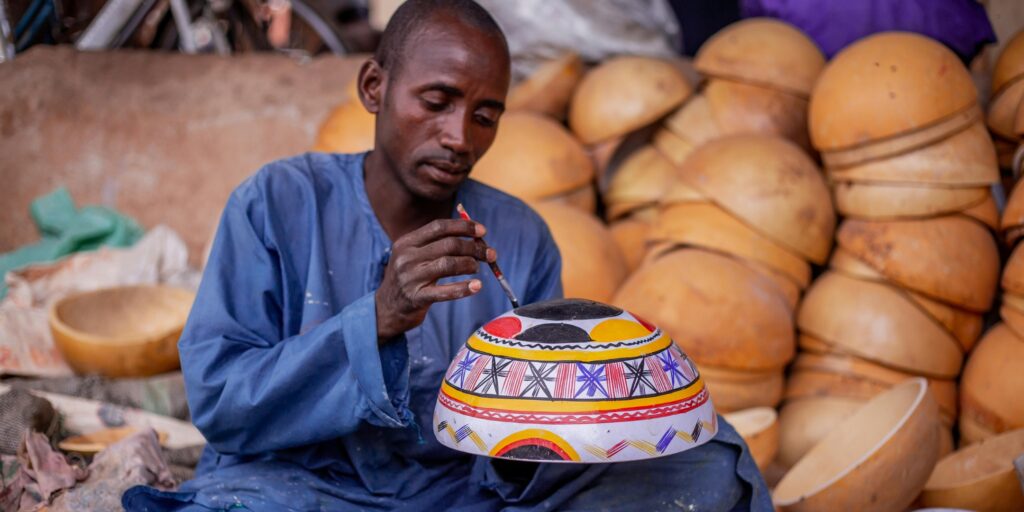
One of the reasons people buy handmade products is that they are made by people rather than produced entirely through industrial processes.
That can mean small variations in texture, stitching, shape, colour or finish. Such differences are not automatically signs of poor quality. In some products, they are part of what makes each piece distinctive.
There is still a difference between handmade character and poor workmanship.
Before purchasing an expensive handmade product, examine photographs closely. Look at seams, edges, stitching, joins and finishing. If the available photographs do not show enough detail, ask the seller for additional images.
For customized products, clarify exactly what will be made before paying. A photograph may represent a previous piece rather than the precise item you will receive.
Good communication matters particularly when the product is made to order.
Ask Questions Before You Buy
Buying directly from a small business gives you an opportunity that large retailers do not always provide: you can speak directly with the person who makes or sells the product.
Use that opportunity.
If the description does not answer an important question, ask before placing your order. You may want to confirm measurements, materials, colour, customisation, production time or delivery arrangements.
For a handmade item, also ask whether the product shown is the exact item you will receive or an example that will be recreated.
Clear questions protect both sides. The seller understands what you expect, while you have a better understanding of what you are purchasing.
Pay Attention to Reviews and Customer Experience
Reviews can be useful, but they should not be the only thing you consider.
Look for evidence that the business has actually delivered products to customers. Customer photographs, tagged posts, repeat customers and detailed reviews can provide useful context.
It is also worth paying attention to how the business communicates before you buy.
Does the seller answer questions clearly? Do they provide the information you need? Are they transparent about delivery times? Do they explain what happens if there is a problem with an order?
A professional customer experience does not require a large company. A small business can provide clear communication and reliable service just as effectively.
Understand Delivery Before Placing the Order
Delivery is one of the areas where online purchases can become complicated, particularly when a small business does not have a formal ecommerce system.
Before paying, find out:
- Where the business delivers
- How much delivery costs
- How long delivery normally takes
- Whether the product is already available or made after ordering
- How you will receive tracking information, where applicable
- What happens if the item arrives damaged or is not what you ordered
These questions become even more important when purchasing from outside your city or country.
A product may appear reasonably priced until delivery is added, so consider the total cost of the purchase, not just the advertised product price.
Nigerian Handmade Products Go Beyond Traditional Crafts
When people hear “Nigerian handmade products,” they may immediately think about traditional crafts. Those products are certainly part of the picture, but the country’s small-business ecosystem is much broader.
You can find contemporary Nigerian businesses producing fashion, jewellery, footwear, leather goods, accessories, artwork, furniture, beauty products, home décor and other goods.
Some combine traditional techniques with modern designs. Others operate entirely within contemporary product categories.
That variety is worth exploring because it changes the way you think about shopping from Nigerian businesses. You are not limited to souvenirs or products associated with a particular cultural style. You can find everyday products designed and made by Nigerian entrepreneurs for local and international customers.
How to Discover Businesses That Are Still Small
Some of the most interesting products will not come from businesses with large advertising budgets.
A small maker may have a few hundred followers and still produce excellent work. Another business may have a strong customer base in its local community but very little visibility outside it.
This is one reason social media discovery can be valuable. Search by product rather than only by brand.
Instead of searching only for a particular company, try terms related to what you want to buy: Nigerian leather bags, handmade jewellery Nigeria, Nigerian handmade shoes, handmade home décor Nigeria, Nigerian fashion accessories and similar phrases.
You can also look through hashtags, creator recommendations, customer posts and local business communities.
As e-commerce infrastructure improves, more of these businesses will be able to present their products through dedicated online storefronts rather than relying entirely on social media and messaging apps.
How to Create an Online Store in Nigeria Without Spending a Fortune
What to Look for in a Good Online Buying Experience
Whether you discover a business through Instagram, TikTok, Google or a marketplace, the same basic principles apply.
You should be able to understand what the product is, see it clearly, know how much it costs and understand how the purchasing process works.
A professional online buying experience does not have to be complicated. It simply removes unnecessary uncertainty.
For shoppers, that means fewer messages just to find out a price or product size. For businesses, it means spending less time answering repetitive questions and more time serving customers.
This is one of the reasons digital storefronts can be useful for small businesses. They give a business a permanent place where customers can see its products and get the information they need before making contact.
The Future of Discovering Nigerian Products Online
Nigeria’s small-business economy is already active online. What is changing is the infrastructure around it.
Social media has made it easier for businesses to reach people. WhatsApp has made direct communication and selling more accessible. Ecommerce platforms and digital storefronts are creating another layer between discovery and purchase.
The opportunity is to bring those pieces together without making online selling unnecessarily expensive or complicated for small businesses.
For shoppers, that means a better way to discover businesses that may otherwise remain hidden among thousands of social media accounts.
For Nigerian makers and small businesses, it means having a place where their products can be discovered beyond their existing network.
AFOMA Marketplace and the Future of Nigerian Small-Business Commerce
AFOMA Marketplace is building toward that opportunity.
The goal is to create an affordable online marketplace and digital storefront environment where small businesses, makers, creatives and artisans can present their products professionally and reach customers online.
The Nigerian marketplace is not yet open, so we are not asking shoppers to browse products that are not there. Instead, we are building the community and business network ahead of the launch.
If you are interested in discovering Nigerian small businesses and products as AFOMA develops its Nigerian marketplace, you can join the Nigeria launch list and receive updates as the platform becomes available.
Final Thoughts
Finding Nigerian handmade products online should not be limited to knowing the right Instagram account or having someone’s WhatsApp number.
There is a large and diverse community of Nigerian makers and small businesses producing products worth discovering. The challenge is making those businesses easier to find and giving customers enough information to buy with confidence.
Until the e-commerce infrastructure catches up with the creativity already present in the market, shoppers will continue to rely heavily on social media, referrals and direct conversations.
That is changing. As more Nigerian businesses establish professional online storefronts and more platforms make local products easier to discover, buying from Nigerian small businesses can become a much simpler experience.
AFOMA Marketplace intends to be part of that change.
Frequently Asked Questions
Where can I find Nigerian handmade products online?
Nigerian handmade products can be found through social media platforms such as Instagram, TikTok and Facebook, as well as individual business websites, online marketplaces and WhatsApp Business accounts. Searching by product category can help you discover smaller businesses that may not have a large online following.
What types of handmade products can I buy from Nigerian businesses?
Nigerian businesses produce a wide range of handmade and small-batch products, including jewellery, leather goods, footwear, fashion, accessories, artwork, home décor and woven products.
How can I tell if a Nigerian handmade product is good quality?
Look closely at product photographs and descriptions, paying attention to materials, construction, stitching, finishing and dimensions. Customer reviews and photographs can also provide useful information. If something is unclear, ask the seller before you buy.
Can I buy Nigerian handmade products from outside Nigeria?
Many Nigerian businesses serve customers outside the country, although international delivery varies from one seller to another. Before ordering, confirm whether the seller ships to your country, the delivery cost, expected timeframe and any additional charges that may apply.
Is AFOMA currently selling Nigerian products?
AFOMA is building its Nigerian marketplace and does not currently have a Nigerian product inventory available for shoppers. The Nigeria launch list allows interested customers and businesses to stay informed as the marketplace develops.
