.png&w=1920&q=75)
- Date
How to Verify an Authentic Handmade Product Before You Buy?
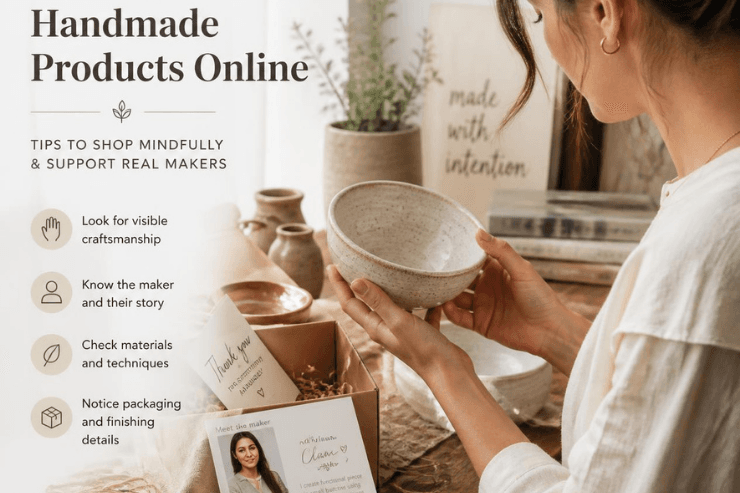
You order something labeled “handmade.” It arrives, and something feels off.
The stitching is too perfect. The pattern repeats exactly like the last twenty listings you scrolled past. It feels factory-made, not handmade.
This happens more often than most buyers realize. As handmade products online grow in popularity, so does the number of sellers stretching the word “handmade” to mean almost anything.
Genuine craftsmanship deserves better than a guessing game. This blog breaks down how to spot the real thing, so your next purchase actually supports a maker’s hands, not a machine’s.
When “Handmade” Doesn’t Mean Handmade
Not every product wearing the label earns it.
Some sellers use “handmade” loosely to describe items that are:
- Machine-cut, then hand-assembled
- Mass-produced with minor manual touch-ups
- Factory-made and simply hand-packaged
None of these are fully handcrafted, even if part of the process involves human hands.
Look Closely at the Small Imperfections
Genuine handcrafted work rarely looks perfectly uniform.
Machines are built to repeat the same motion endlessly. Human hands, however skilled, never work exactly the same way twice.
Real signs of handmade craftsmanship include:
- Slightly uneven stitching or brushstrokes
- Small variations between similar pieces
- Visible texture from tools or hands, not machines
- Natural irregularities in shape, size, or pattern
If every piece in a collection looks identical down to the millimeter, it likely came from a mold or machine, not a workbench. Zoom into product photos before deciding.
Check the Materials Before You Buy
Authentic handmade jewelry, handmade accessories, and handmade bath soaps usually list specific, real materials, not vague terms.
- Look for named metals, stones, fabrics, or oils
- Be cautious of generic terms like “premium material”
- Ask if natural or raw materials were used, especially for handmade personal care items
Real makers usually know their materials well enough to talk about them in detail.
Ask About the Maker Behind the Product
A genuine handmade seller usually has a story to share.
Authentic craftsmanship is personal. It comes with a name, a process, and often years of practice behind a single technique.
Before buying, look for:
- A maker’s name, workshop, or studio mentioned clearly
- Photos or videos of the actual making process
- Details about how long a piece takes to create
- Any cultural or regional influence behind the design, such as African fashion culture or African clothing culture
If a listing gives zero information about who made it or how, that’s worth questioning.
Notice What the Price Is Really Telling You
Price alone doesn’t confirm authenticity, but it often hints at it.
Handmade work takes time, skill, and often costs more in materials than mass production.
- Extremely low prices for detailed work are a red flag
- Fair pricing usually reflects hours of manual effort
- Sudden bulk discounts on “one-of-a-kind” items don’t add up
- Comparing similar listings across sellers can reveal what a fair price range looks like
If a price feels too good for the effort described, it probably is.
Spot the Difference at a Glance
| Handmade Product | Mass-Produced Product |
| Slight variations between pieces | Identical in every detail |
| Visible tool or hand marks | Smooth, uniform finish |
| Maker’s story is easy to find | Little to no maker information |
| Materials are specific and named | Materials described vaguely |
| Pricing reflects time and skill | Pricing reflects bulk output |
Keep this comparison in mind the next time you’re unsure about a listing.
Where You Shop Also Makes a Difference
Not every ecommerce marketplace verifies its sellers the same way.
Some platforms simply let anyone list a product under the handmade category, with little to no screening involved.
An authentic handmade marketplace usually takes steps such as:
- Reviewing sellers before listing their products
- Requiring details about materials and process
- Featuring maker profiles alongside products
- Encouraging buyers to ask questions directly to sellers
This applies across categories, from handmade home essentials and handmade toys to handmade fashion for women, handmade fashion for men, and handmade fashion for kids. Platforms built around real artisanal marketplace values tend to make this information easier to find, rather than burying it in fine print.
Trust Your Instincts, Then Verify
If something feels mass-produced, it probably is, even if the listing says otherwise.
A few quick habits help before checking out:
- Read the full product description, not just the title
- Look closely at photos for texture and imperfections
- Message the seller if details feel unclear
Authentic craftsmanship rarely hides from questions. Genuine makers usually welcome them.
Every Purchase Should Honor the Hands Behind It
Identifying authentic handmade products isn’t about being suspicious of every listing. It’s about knowing what genuine craftsmanship looks like, so you can recognize it with confidence.
Small imperfections, clear materials, and a visible maker’s story are usually reliable signs. Together, they separate real handcrafted work from items that only borrow the label.
The next time you browse handmade arts, handmade digital arts, handmade stationary, or handmade games, take a moment to look closer. That small habit protects both your money and the makers who deserve credit for their craft.
At AFOMA Marketplace, understanding what makes a product truly handmade is the first step toward appreciating the hands behind it.
Frequently Asked Questions
Q1. How can I tell if a product is really handmade online?
Look for small imperfections, specific material details, and information about the maker. Genuine listings usually explain the process, not just describe the finished item.
Q2. Why do handmade products cost more than factory-made ones?
Handmade items take more time, skill, and often higher-quality materials to create. Pricing usually reflects manual effort, unlike mass production, which relies on speed and volume.
Q3. Are all products labeled “handmade” actually made by hand?
Not always. Some listings use the term loosely for items that are machine-made and only hand-finished or hand-packaged. Reading full descriptions helps clarify this.
Q4. What questions should I ask a seller to confirm authenticity?
Ask about the materials used, how the product is made, and how long it takes to complete. Genuine makers usually answer these questions clearly and confidently.
Q5. Does buying from a marketplace guarantee handmade authenticity?
Not automatically. Some platforms verify sellers and materials more closely than others. Choosing a marketplace with clear maker profiles makes authenticity easier to confirm.
