.png&w=1920&q=75)
- Date
How to Create a Signature Handmade Style That Customers Instantly Recognize
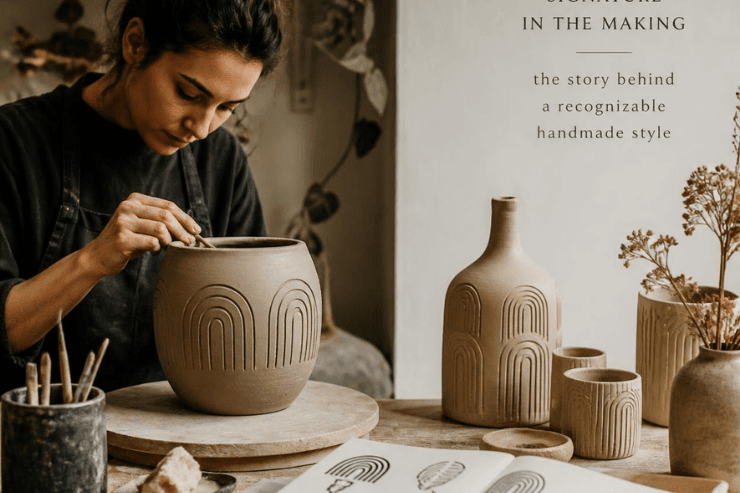
You post a new product and it gets a few likes. A week later, you post another, and it feels like a stranger made it.
Nothing looks connected. The colors shift, materials change and the mood never repeats.
This is one of the quiet reasons many artisans struggle to build a loyal following, even when every individual piece is beautiful. Buyers aren’t just remembering a product. They’re trying to remember you.
A signature handmade style is what makes that possible. It’s not a logo, and it’s not a filter. It’s the thread that ties your work together, so customers can spot it before they even see your name.
Why Your Work Might Be Blending Into the Crowd
Trends are tempting. They’re proven, popular, and easy to follow.
But trends belong to everyone, not just you. Here’s how the pattern usually plays out:
- A shape, color, or theme starts trending online
- Sellers adjust their next piece to match it
- Personal details from earlier work slowly disappear
- Products start looking similar across many shops
- Buyers lose the ability to tell one seller from another
A signature style works differently. It’s built from your own instincts, not the current moment.
Uncover the Style That’s Already Yours
Your style already exists somewhere in your work. It usually shows up when you’re not trying too hard.
Look back at the pieces you’re proudest of, not the ones that sold fastest. Ask what they share.
- A particular shape or silhouette
- A mood, like warmth, boldness, or simplicity
- A cultural or personal story you keep returning to
- A technique you reach for instinctively
These patterns are the beginning of a style. The goal isn’t to invent something new. It’s to notice what’s already true and repeat it on purpose.
Two habits make this easier:
- Write it down. Keep a short list of words that describe your work, like earthy, playful, or refined.
- Lay pieces side by side. Patterns often become obvious once past work is viewed together, not one at a time.
Let Your Colors Do the Talking
Color is often the fastest way a buyer identifies your work, sometimes before they read a single word.
A recognizable palette doesn’t mean using one color forever. It means choosing a range that feels consistent, so pieces feel related even when the designs differ.
How this plays out by category:
- Handmade jewelry: stay within warm metals and earthy stones
- Handmade fashion for women: repeat a consistent tone across prints, dyes, or fabric choices
- Handmade fashion for men: anchor around grounded, neutral shades
- Handmade fashion for kids: lean into two or three playful, repeatable colors
Keep your palette to two or three anchor tones. Let everything else support them, rather than compete.
Pick Materials That Become Your Trademark
Materials carry meaning. They also carry memories.
If you consistently work with a specific wood, fabric, bead, or clay, that material becomes part of your identity over time. Buyers begin to associate it with your name, even before they check who made it.
A few examples of how this builds a reputation:
- A maker known for reclaimed textiles
- A maker known for hand-poured resin
- A maker known for hand-forged metal
None is better than the other. What matters is consistency, so the material is recognizable on sight.
If you work across handmade home essentials, handmade accessories, or handmade living essentials, carry at least one shared material or texture across categories. It creates a thread buyers can follow.
The Finishing Touches Buyers Feel, Not Just See
Finishing is easy to overlook, but it says a lot about craftsmanship.
Small choices shape how a piece feels in someone’s hands:
- Matte versus glossy surfaces
- Raw edges versus polished ones
- Hand-stitched hems versus machine-finished ones
- A signature scent or texture, for handmade bath soaps and handmade personal care items
When finishes stay consistent, work starts to feel intentional rather than accidental. Customers may not name the difference, but they’ll feel it.
Turn Single Products Into a Recognizable Collection
A signature style becomes obvious once pieces are grouped together, not released one at a time with no connection.
Try building small collections around a shared idea, such as a color story, a material, or a theme drawn from African fashion culture or African clothing culture.
Cohesive collections help in a few ways:
- They make your shop feel curated, not random
- They give buyers a reason to explore more than one item
- They reinforce your style with every new release
This approach works well for handmade toys, handmade games, handmade stationary, and handmade digital arts too. Grouping related pieces gives even playful or functional products a stronger sense of identity.
Why Recognition Turns Into Repeat Buyers
People don’t just buy products. They buy trust in what a brand will deliver next.
Here’s what consistency does for a handmade business:
- Buyers know roughly what to expect before a new piece even releases
- Predictability builds comfort, and comfort builds loyalty
- In an ecommerce marketplace, where buyers can’t touch a product first, a recognizable style builds confidence
- Repeat customers return because they trust the maker, not just one great item
- A recognizable style is easier to describe to a friend than a one-off product ever is, which drives word-of-mouth
Stay Current Without Losing Yourself
None of this means ignoring trends completely. Trends can still inform your work, as long as they pass through your own style first.
| Trend-First Approach | Style-First Approach |
| Copies what’s currently popular | Filters trends through existing identity |
| Products shift with every season | Core colors and materials stay steady |
| Hard for buyers to recognize | Easy for buyers to recognize |
| Risks blending into the crowd | Builds a lasting creative reputation |
The goal is influence, not imitation. Trends should season your style, not overwrite it.
Branding Gets You Noticed, Style Gets You Remembered
Branding and signature style aren’t the same thing, even though they’re often confused.
| Branding | Signature Style |
| Logo, fonts, page layout | Colors, materials, finishes, mood |
| Visible on the surface | Built into the making process |
| Can be changed quickly | Develops slowly, piece by piece |
| Shapes first impressions | Shapes long-term recognition |
This is part of what shapes an authentic handmade marketplace. Buyers are drawn not just to individual products, but to the recognizable hand and perspective behind them.
Every Signature Style Starts With a Choice
A signature style isn’t something you design overnight; it builds slowly, through the colors you keep choosing, the materials you keep reaching for, and the finishes you refuse to compromise on. Every collection you release strengthens that identity of yours.
Customers always remember the ones whose work feels unmistakably their own, piece after piece. So start with one honest observation about what already feels true to your craft, and let that guide your next few products. This is where it starts and not with a finished style, but with one honest choice you decide to repeat.
Every artisan on AFOMA Marketplace carries a story worth recognizing, one piece at a time.
Frequently Asked Questions
Q1. How do I find my own handmade style if I’ve never defined one?
Start by reviewing your past work instead of your best-selling pieces. Look for repeated shapes, moods, or techniques. Whatever keeps showing up, even without planning, is usually the start of your true style.
Q2. What’s the difference between a brand and a signature style?
A brand includes visible elements like a logo, fonts, or page design. A signature style lives deeper, in your color choices, materials, and finishing techniques, and it shapes how your work is remembered over time.
Q3. How many colors or materials should a handmade brand stick to?
Most sellers do well with two to three anchor colors and one or two core materials. Fewer choices, used consistently, are easier for buyers to recognize than a wide, changing variety.
Q4. Should I follow trends or ignore them completely as an artisan?
extreme works well. Filter trends through your existing style instead of copying them directly. Adopt only what fits your identity, and skip what pulls your work away from being recognizable.
Q5. How long does it take to build a recognizable handmade style?
There’s no fixed timeline, since it depends on how consistently you apply your choices. Most artisans notice buyers recognizing their work after several consistent collections, not a single product launch.
