.png&w=1920&q=75)
- Date
Handmade Business About Page Tips to Win Customer Trust
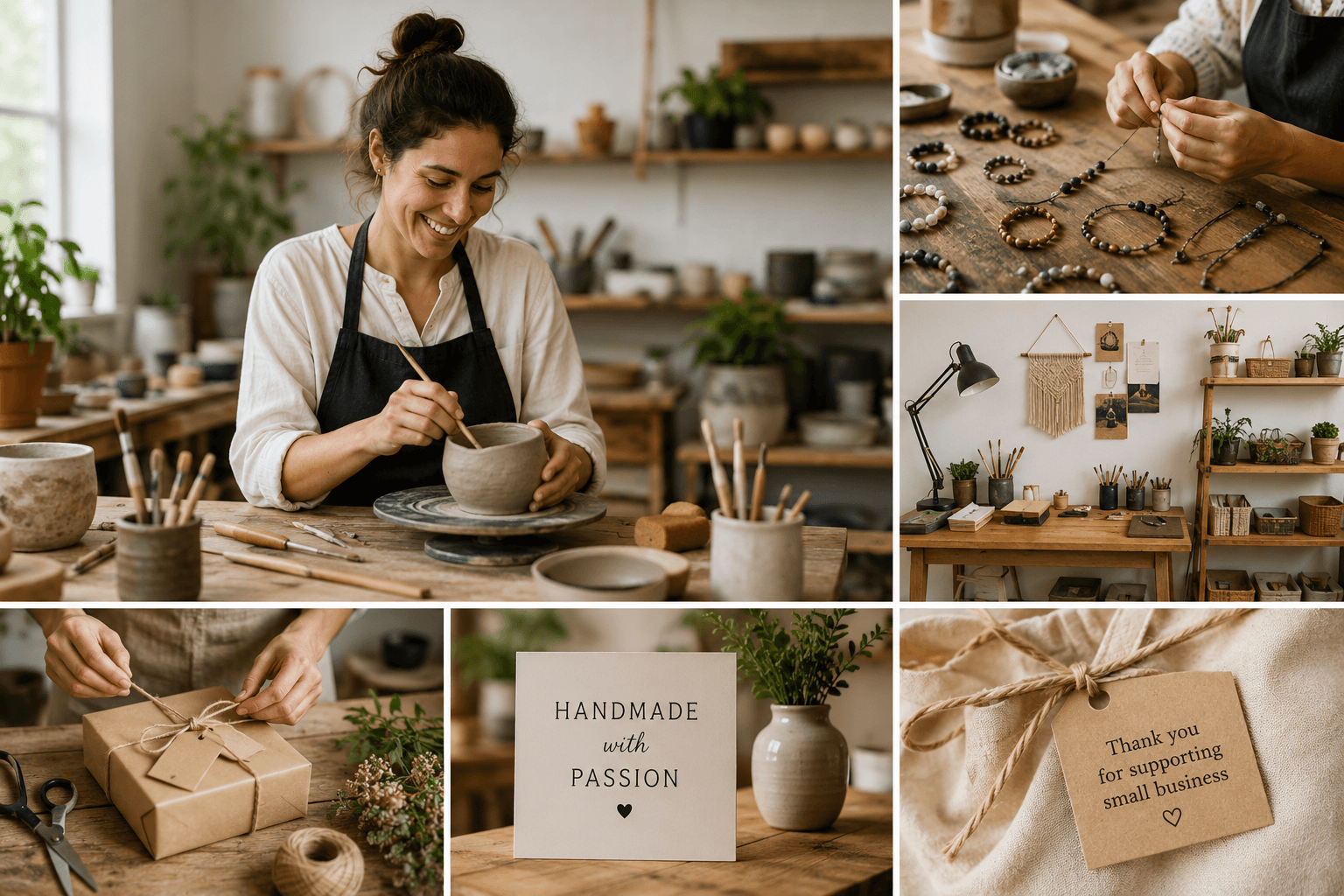
When people shop for handmade products, they are not just buying an item. They are buying a story, a process, and often a connection with the person who created it.
That is why your handmade business About page can be one of the most important pages on your profile or website.
Many artisans spend hours perfecting product photos and descriptions but give very little attention to their About page. Yet buyers frequently visit this section before making a purchase. They want to know who they are supporting, what makes the products unique, and whether they can trust the seller.
A well-crafted About page helps build confidence, communicate authenticity, and create stronger relationships with potential customers. It can turn a casual visitor into a loyal supporter of your handmade business.
Why Do Buyers Read a Handmade Business About Page?
When customers shop online, they cannot meet you in person.
Your About page helps fill that gap.
Buyers often visit this section to learn:
- Who made the product
- Why the business was started
- What values guide the brand
- How products are created
- What makes the work different
In handmade businesses, trust often comes from understanding the person behind the craft.
People want to feel connected to what they purchase. A strong About page helps create that connection.
What Should a Handmade Business About Page Include?
Many artisans assume they need a lengthy biography.
In reality, buyers are usually looking for a few key pieces of information.
Your Story
Explain how your creative journey began.
You do not need to share every detail. Focus on the experiences that shaped your work and inspired your business.
Your Craft
Help customers understand what you create and how you create it.
Share details about:
- Materials
- Techniques
- Creative process
- Sources of inspiration
Your Values
People increasingly want to support businesses that align with their values.
If sustainability, cultural preservation, ethical sourcing, or craftsmanship are important to your brand, explain why.
Your Mission
Tell buyers what you hope to achieve through your work.
A clear mission helps customers understand the purpose behind the products.
How Do You Tell Your Artisan Story Without Sounding Promotional?
One of the biggest concerns sellers have is sounding overly sales-focused.
The best artisan stories feel genuine.
Instead of focusing on selling, focus on sharing.
For example:
Less effective:
“We create the best handmade products on the market.”
More effective:
“What started as a small passion project quickly became a way to preserve traditional techniques and share them with a wider audience.”
Authenticity is often more persuasive than marketing language.
Buyers appreciate honesty and sincerity.
Why Does Transparency Build Trust With Customers?
Trust grows when customers feel informed.
Transparency can include:
- Where materials come from
- How products are made
- Production timelines
- Creative processes
- Business values
Customers do not expect perfection.
They appreciate openness.
In an authentic handmade marketplace, transparency helps distinguish genuine artisans from mass-produced alternatives.
The more clearly you communicate your process, the easier it becomes for buyers to trust your work.
How Can Photos Strengthen Your About Page?
Words are important, but visuals add another layer of credibility.
Consider including:
- Photos of yourself
- Images of your workspace
- Behind-the-scenes creation process
- Tools and materials
- Finished products in progress
These images help buyers feel connected to the human side of your business.
They also reinforce authenticity.
Seeing the maker often builds trust faster than reading several paragraphs of text.
What Values Should You Highlight on Your About Page?
Your values help customers understand what your brand stands for.
Examples include:
- Supporting traditional craftsmanship
- Ethical production methods
- Sustainable sourcing
- Cultural storytelling
- Community support
- Quality over quantity
You do not need to list every value.
Focus on the principles that genuinely guide your work.
Consistency matters more than quantity.
What Are the Most Common About Page Mistakes?
Many artisans unintentionally weaken their About pages by making a few common mistakes.
Making It Entirely About Products
Your product pages already explain what you sell.
Your About page should explain who you are.
Writing Too Little
A few vague sentences often leave buyers with more questions than answers.
Writing Too Much
Long life stories can overwhelm readers.
Keep the focus on information that helps customers understand your business.
Using Generic Language
Phrases like “high-quality products” or “excellent craftsmanship” are common.
Instead, show specific examples of your process and values.
Forgetting to Update Information
As your handmade business evolves, your About page should evolve too.
How Can Your About Page Help You Sell Handmade Products Online?
Trust influences buying decisions.
When customers understand your story, they often feel more confident about making a purchase.
A strong About page can:
- Increase buyer confidence
- Differentiate your brand
- Reinforce authenticity
- Create emotional connection
- Encourage repeat customers
For artisans who want to sell handmade products online, these factors can be just as important as product quality.
People often buy from creators they feel connected to.
What Does an Effective Handmade Business About Page Look Like?
A strong About page usually answers three simple questions:
Who Are You?
Introduce yourself naturally.
What Do You Create?
Explain your products and craft.
Why Do You Create It?
Share your motivation and purpose.
When these questions are answered clearly, customers gain a better understanding of your brand.
Simple, honest communication is often the most effective approach.
Why Authenticity Matters More Than Ever
Online shopping continues to evolve.
Customers have endless choices, but they increasingly seek meaningful purchases and genuine connections.
Authenticity helps handmade businesses stand out.
A thoughtful About page allows buyers to see the person, passion, and craftsmanship behind every product.
That connection often becomes the foundation of long-term customer trust.
Turning Your Story Into Your Strongest Asset
The internet has changed how art and handmade products are discovered. Today, artisans no longer need galleries or physical storefronts to reach buyers who appreciate their work.
Customers want more than products. They want to understand the stories, values, and craftsmanship behind what they purchase.
A strong About page helps create that connection.
As curated marketplaces continue to support artisan discovery, transparency and authenticity become even more important. AFOMA Marketplace helps creators sell handmade products online while connecting them with buyers who value genuine craftsmanship and meaningful stories.
Your About page is more than a biography—it is an opportunity to build trust before the first purchase.
Explore AFOMA Marketplace to share your story and connect with a global community that appreciates authentic handmade work.
FAQs
1. What should a handmade business About page include?
A handmade business About page should include your story, creative process, values, mission, and information that helps customers understand your brand.
2. Why is an About page important for handmade sellers?
An About page builds trust by helping buyers learn about the artisan behind the products, making purchases feel more personal and meaningful.
3. How long should a handmade business About page be?
Keep it concise but informative. Focus on your story, values, and craftsmanship without overwhelming readers with unnecessary details.
4. Can an About page help increase handmade product sales?
Yes. A strong About page builds credibility, creates emotional connections, and often increases buyer confidence before making a purchase.
5. What are the most common About page mistakes?
Common mistakes include being too vague, focusing only on products, using generic language, and failing to communicate your unique story and values.
