
- Date
How to Prepare Your Handmade Business for International Orders
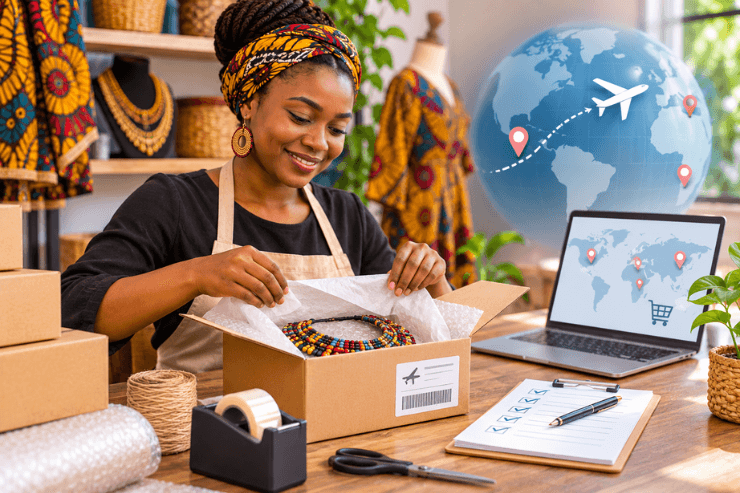
Getting your first order from another country can feel like a major step for a handmade business. It means someone far away has found your work and decided it is worth buying. But an international order also raises practical questions. How much will shipping cost? What should you put on the customs form? Will the product be allowed into the destination country? Who pays import duties?
International shipping for handmade products requires more preparation than simply handing a parcel to a courier. From product information and packaging to customs and delivery expectations, a few details can determine whether an international order goes smoothly.
Here is what handmade sellers should have ready before they start shipping overseas.
What Should Handmade Sellers Check Before Shipping Internationally?
Start by checking whether your product can be shipped to the destination country.
Rules can vary depending on the product and its materials. Items containing wood, plant materials, animal-derived materials, food, cosmetics, or other regulated materials may face additional requirements.
This matters because a product that is easy to ship domestically may have different requirements at the border.
Before accepting an international order, check:
- Whether the destination accepts the product
- Whether its materials are restricted
- Whether special documentation is required
- Whether the carrier has product-specific restrictions
- Whether the destination has additional import requirements
For handmade sellers, this is an important first step. Do not assume that every product can travel to every country simply because it can be sold locally.
How Do You Calculate International Shipping Costs for Handmade Products?
One of the easiest ways to lose money on international orders is to calculate postage from the product alone.
Your shipping calculation should consider the final packaged product, including its weight and dimensions. AFOMA’s own seller guidance asks artisans to provide the weight, height, length and width of the packaged product.
Consider:
Product + protective packaging + package dimensions + destination + shipping service
You may also need to account for:
- Tracking
- Insurance, where appropriate
- Remote-area charges
- Expedited delivery
- Carrier-specific fees
For example, a lightweight handmade scarf may be inexpensive to ship. A ceramic vase may require a larger, heavier package because it needs substantial protection.
Before listing a product for international buyers, know what it costs to send the finished parcel, not just the item.
What Customs Information Do You Need for International Handmade Orders?
Customs is where international shipping becomes different from domestic fulfilment.
The seller needs to provide accurate information about what is inside the package. Depending on the shipment and destination, this can include the product description, value, country of origin, weight, quantity and product classification.
An HS code helps customs authorities classify goods for international trade. AFOMA already requires sellers to provide an HS code, which helps determine how products are classified for duties and tariffs.
The important point is accuracy.
Do not describe a handmade necklace simply as a “gift” or deliberately declare a lower value to reduce possible charges. Customs documentation should reflect what the product actually is and its genuine value.
Incorrect or vague information can create delays, additional questions, or other problems at the border. Official trade guidance also notes that HS classification is used for customs documentation and determining applicable tariff treatment.
Who Pays Customs Duties and Taxes on International Orders?
Shipping charges and import charges are not always the same thing.
A buyer may pay the shipping fee at checkout and still face import duties, taxes, or other charges when the package reaches their country. The exact treatment depends on the destination, product, value, and shipping arrangement.
That is why handmade sellers should never promise that the shipping price covers every possible border charge unless their shipping arrangement specifically does so.
Instead, make the situation clear before purchase.
A simple explanation can prevent an unpleasant surprise:
Shipping cost: what it costs to transport the package.
Import charges: taxes, duties, or fees that may be applied by the destination country.
Clear expectations are especially important when selling handmade products internationally because buyers may be unfamiliar with the customs rules in the seller’s country.
How Should You Package Handmade Products for International Shipping?
International parcels may pass through several sorting and handling points before reaching the buyer.
Your packaging therefore needs to protect the product, not just make it look attractive.
Think about what could happen during transit.
For fragile handmade products such as ceramics, glass, paintings, or delicate sculptures, use enough internal protection to prevent movement and impact. For textiles or other moisture-sensitive products, consider suitable protective wrapping.
Before sealing the parcel, check:
- Is the product secure inside?
- Can it move around?
- Is the outer package strong enough?
- Are the final weight and dimensions accurate?
- Can shipping labels be attached clearly?
Your beautiful unboxing experience still matters. But for international orders, protection has to come first.
What Should You Tell International Buyers Before They Order?
International buyers need more information than a product description alone.
Tell them what they can reasonably expect from the order.
Important details include:
- Dispatch time
- Estimated delivery window
- Tracking availability
- Shipping method
- Possible customs charges
- Any known product restrictions
- Return or exchange conditions
This is particularly important for handmade products because some items have a longer preparation time. AFOMA’s seller guidance already separates dispatch time from the product itself because an artisan may need time to create the item before it is handed to the shipping partner.
Be careful with delivery promises. International parcels can encounter customs checks, carrier delays, weather disruptions, or other issues outside the seller’s control.
A realistic delivery window is better than an overly confident promise.
What Should Handmade Sellers Prepare Before Their First International Order?
Before you start selling handmade products internationally, create a simple readiness checklist.
Product
☐ Check destination restrictions
☐ Confirm materials and country of origin
☐ Know the correct product classification
Shipping
☐ Weigh the fully packaged product
☐ Measure the final parcel
☐ Compare available shipping services
☐ Decide whether tracking is needed
Customs
☐ Prepare an accurate product description
☐ Confirm the HS code
☐ Declare the actual value
☐ Understand possible duties or taxes
Customer communication
☐ State your dispatch time
☐ Give a realistic delivery window
☐ Explain possible import charges
☐ Make your international return policy clear
This preparation turns international shipping from something you figure out after receiving an order into a process you are ready to repeat.
What Are the Most Common International Shipping Mistakes Handmade Sellers Make?
A few mistakes appear repeatedly when small businesses begin shipping overseas.
Underestimating package size: The product may be small, but protective packaging can significantly change shipping costs.
Using vague customs descriptions: “Gift” or “handmade item” may not adequately describe what is being shipped.
Ignoring destination restrictions: Materials that are acceptable in one country may face different rules elsewhere.
Promising exact delivery dates: International delivery involves variables that sellers cannot always control.
Forgetting the buyer’s possible import charges: Unexpected duties or taxes can affect the customer’s experience.
The goal is not to eliminate every possible problem. It is to anticipate the issues you can reasonably prepare for.
How Can Handmade Sellers Start Selling to Global Buyers With Confidence?
Going international does not mean shipping everywhere at once.
A handmade business can start by choosing a few destinations it understands well, checking product restrictions, calculating realistic shipping costs, and creating a repeatable fulfilment process.
An international shipping strategy for handmade sellers should grow alongside the business. As orders increase, sellers can learn which destinations, products, shipping services, and packaging methods work best for them.
Platforms can also reduce some of the operational burden. AFOMA, for example, provides marketplace infrastructure for artisans and includes shipping-related information and support within its seller process.
The aim is simple: make global selling manageable without losing the care that makes handmade commerce special.
Conclusion
The internet has changed how art and craftsmanship are discovered. An artist no longer needs to rely only on a local gallery, craft fair, or physical shop to reach someone who values their work.
A buyer thousands of kilometres away can now discover an artisan, understand the work behind a product, and place an order from home.
That opportunity also comes with responsibility. International buyers need accurate product information, realistic delivery expectations, transparent costs, and thoughtful fulfilment.
Curated marketplaces can help bridge that distance while keeping the maker and the authenticity of the product at the centre.
AFOMA Marketplace connects artisans with buyers beyond their local markets, giving handmade businesses a way to participate in global commerce while staying rooted in craftsmanship and authenticity.
Going global is not simply about finding customers in other countries. It is about being prepared to serve them well.
FAQs
1. How do I ship handmade products internationally?
Choose a suitable carrier, check destination restrictions, prepare accurate customs information, package securely, and provide buyers with realistic delivery expectations.
2. What information is needed for international shipping?
International shipments may require product descriptions, value, weight, dimensions, country of origin, HS codes, and accurate sender and recipient information.
3. Do handmade products need an HS code?
Many international shipments require product classification for customs purposes. The correct HS code depends on the product, materials, and destination.
4. Who pays customs duties on international orders?
Import duties and taxes are generally determined by the destination country and shipping arrangement, so sellers should explain possible charges before purchase.
5. How much does international shipping for handmade products cost?
Costs depend on destination, package weight, dimensions, shipping speed, carrier, tracking, insurance, and any additional services required for delivery.
